Mpox
What is Mpox (monkeypox)?
Mpox is a rare disease caused by infection with the Mpox virus. Mpox virus is part of the same family of viruses as variola virus, the virus that causes smallpox. Mpox symptoms are like smallpox symptoms, but milder, and Mpox is rarely fatal. Mpox is not related to chickenpox.
Mpox can make you sick including a rash or sores (pox), often with an earlier flu-like illness.
Mpox can spread to anyone through close, personal, often skin-to skin contact.
What are the symptoms?
Early flu-like symptoms of Mpox can include:
Fever
Headache
Muscle aches
Backache
Swollen lymph nodes
Chills
Exhaustion
Rash appears within 1 to 3 days (sometimes longer) after fever.
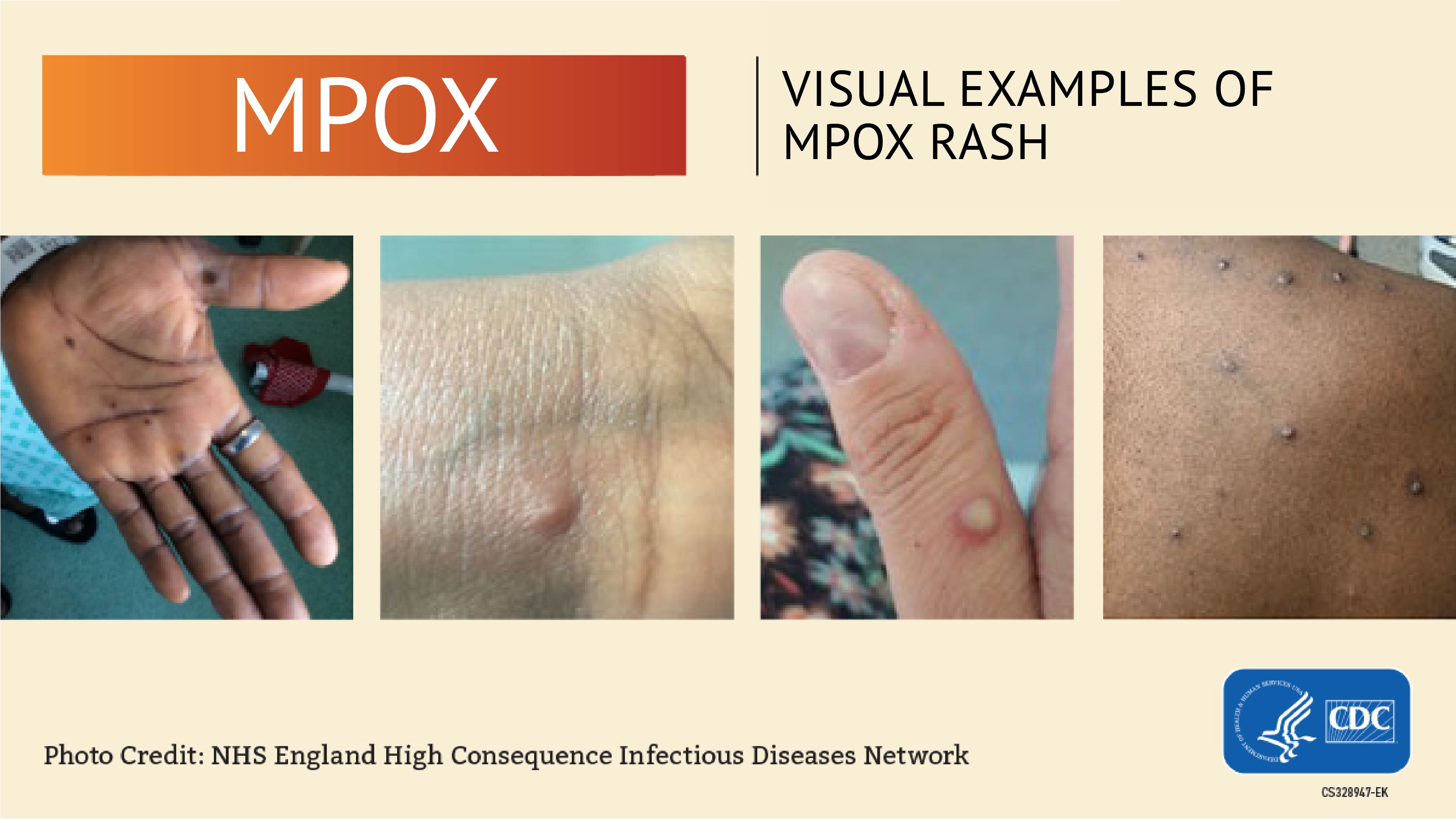
The rash can look like pimples or blisters and may be painful or itchy.
The rash will go through several stages, including scabs, before healing.
Visual Examples of Mpox Rash (CDC)
You only may experience all or only a few symptoms.

How long do symptoms last?
Mpox symptoms usually start within 3 weeks of exposure to the virus. If someone has flu-like symptoms, they will usually develop a rash 1-4 days later.
Mpox can be spread from the time symptoms start until the rash has healed, all scabs have fallen off, and a fresh layer of skin has formed. The illness typically lasts 2-4 weeks.
If You Have a New or Unexplained Rash or Other Symptoms…
Avoid close contact, including sex or being intimate with anyone, until you have been checked out by a healthcare provider.
If you don’t have a provider or health insurance, contact a public health clinic near you to make an appointment or seek testing information.
When you see a healthcare provider, wear a mask, and remind them that this virus is circulating in the area.
How does Mpox spread?
Mpox can spread to anyone through close, personal, often skin-to-skin contact, including:
Direct contact with Mpox rash, scabs, or body fluids from a person with Mpox.
Touching objects, fabrics (clothing, bedding, or towels), and surfaces that have been used by someone with Mpox.
Contact with respiratory secretions.
This direct contact can happen during intimate contact, including:
Oral, anal, and vaginal sex or touching the genitals (penis, testicles, labia, and vagina) or anus (butthole) of a person with Mpox.
Hugging, massage, and kissing.
Prolonged face-to-face contact.
Touching fabrics and objects during sex that were used by a person with Mpox and that have not been disinfected, such as bedding, towels, fetish gear, and sex toys.
A pregnant person can spread the virus to their fetus through the placenta.
It’s also possible for people to get Mpox from infected animals, either by being scratched or bitten by the animal or by preparing or eating meat or using products from an infected animal.
Mpox in animals and pets: https://www.cdc.gov/mpox/about/mpox-in-animals-and-pets.html
A person with Mpox can spread it to others from the time symptoms start until the rash has fully healed and a fresh layer of skin has formed. The illness typically lasts 2-4 weeks.
How is Mpox treated?
There are no treatments specifically for Mpox virus infections. However, Mpox and smallpox viruses are genetically similar, which means that antiviral drugs and vaccines developed to protect against smallpox may be used to prevent and treat Mpox virus infections.
Antivirals, such as tecovirimat (TPOXX), may be prescribed by a healthcare provider for people who are more likely to get severely ill, like patients with weakened immune systems.
If you have symptoms of Mpox, you should talk to your healthcare provider, even if you don’t think you had contact with someone who has Mpox.
Reduce the risk and spread of Mpox
Avoid close, skin-to-skin contact with people who have a rash that looks like Mpox.
Do not touch the rash or scabs of a person with Mpox.
Do not kiss, hug, cuddle or have sex with someone with Mpox.
Avoid contact with objects and materials that a person with Mpox has used.
Do not share eating utensils or cups with a person with Mpox.
Do not handle or touch the bedding, towels, or clothing of a person with Mpox.
Wash your hands often.
Wash your hands often with soap and water or use an alcohol-based hand sanitizer, especially before eating or touching your face and after you use the bathroom.
Get vaccinated if you were exposed to Mpox or are at higher risk of being exposed to Mpox can help protect you and your community.
The preferred vaccine to protect against Mpox is JYNNEOS, which is a two-dose vaccine.
Currently, there is a limited supply of JYNNEOS vaccine but there several vaccination hubs in New Jersey. To find a site nearby visit https://www.nj.gov/health/cd/topics/Monkeypox.shtml
For more information on Mpox, including close contacts, isolation guidance, what teens and young adults need to know about Mpox, social gathering, and safer sex visit https://www.nj.gov/health/cd/topics/Monkeypox.shtml
For more updated information on Mpox visit: